
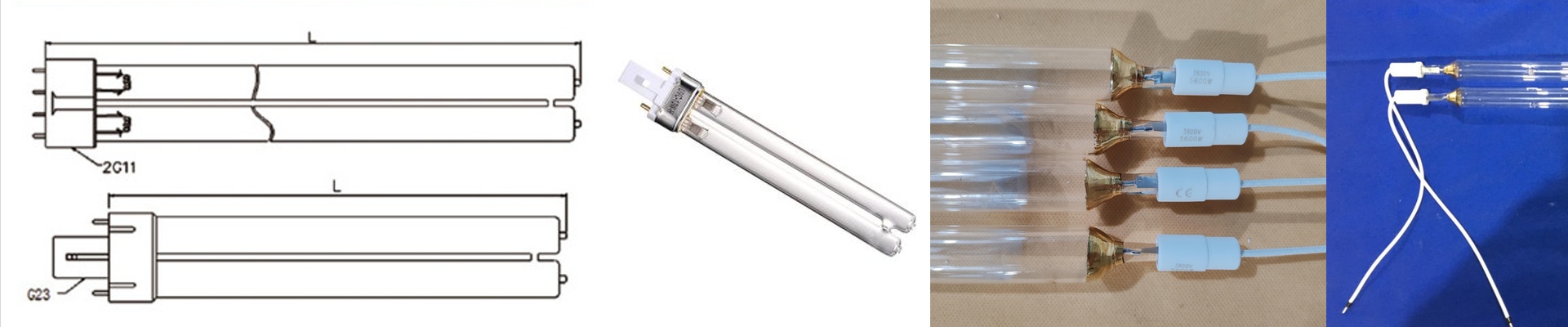
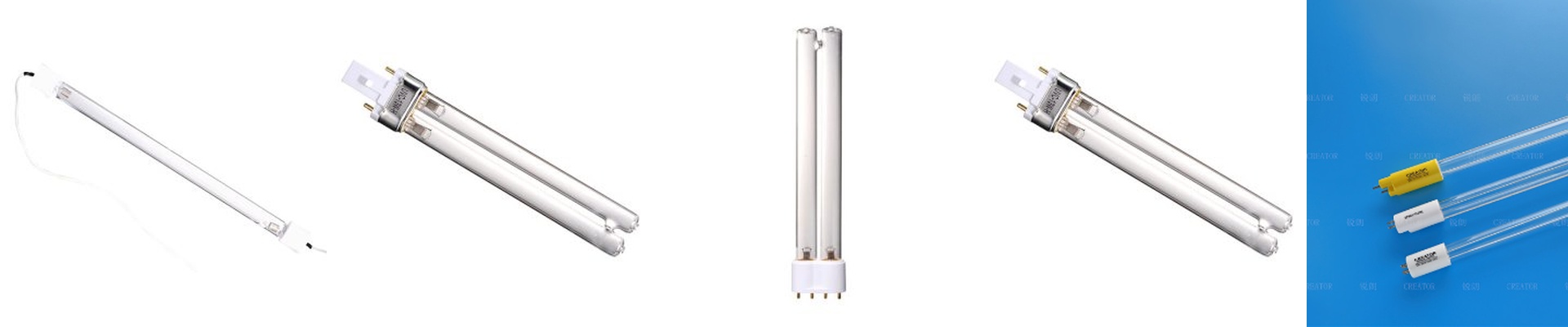
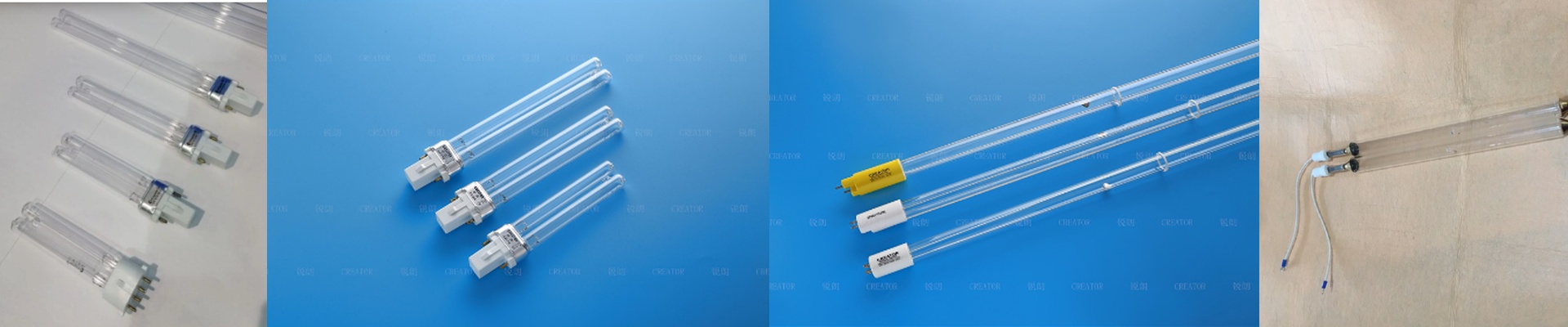
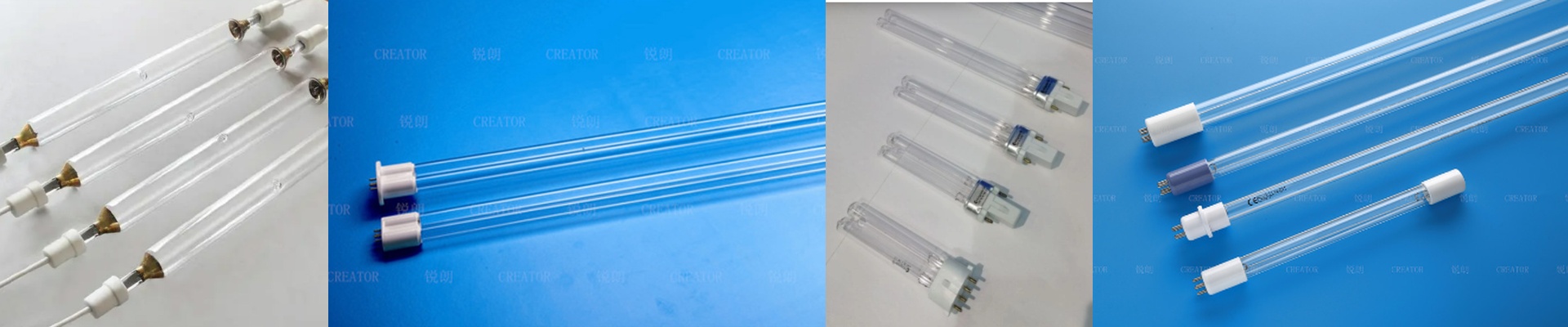
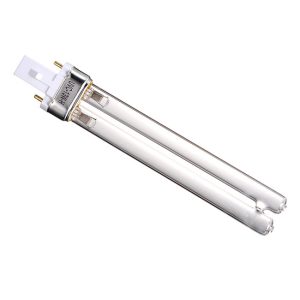
On the floor of a premium streetwear screen shop, the color lab is getting squeezed. You’ve got 5,000 boards queued, and the art is built on deep, saturated primaries with registration that has to be spot-on. The operator pulls a fresh batch of UV-curable ink, sets the line speed, and watches the curing station. If the lamp is even slightly off—too much long-wave bleed, not enough short-wave punch—the ink film won’t cross-link evenly. The fallout shows up fast: dulled saturation, mottled texture, and a color shift that kills brand approval. That’s why the best print houses don’t treat UV lamps like a consumable you swap in and out. They treat them as process instruments, tuned to the photoinitiator package and the substrate. The Tetra UV pond sterilizer bulb, engineered for stable high-output UVC generation, translates directly to repeatable curing performance in industrial UV printing—where spectral precision, irradiance stability, and cost per hour decide your yield.
What actually matters under the hood
Industrial UV curing isn’t “just UV.” It’s matching spectral output to the ink chemistry, delivering enough energy density, and holding that output steady, shift after shift.
- **Spectral output and wavelength discipline.**The Tetra UV pond sterilizer bulb is built around a high-pressure mercury vapor discharge, engineered for a dominant UVC peak at 254 nm with a secondary peak at 185 nm (ozone-producing), depending on configuration. In printing, the real curing energy is typically in the UVA band (315–400 nm), where photoinitiators absorb. When we integrate this lamp into a printing curing module, we use dichroic coatings and optical filtering to knock down unwanted IR and the long-wave tail, and to shape the spectrum toward the ink’s absorption profile. The practical payoff: more of the delivered photons drive cross-linking, and fewer turn into heat that can distort thin substrates.
- **Peak irradiance and energy density.**Curing is a photochemical reaction governed by dose: energy density at the ink surface, expressed in mJ/cm². Peak irradiance (mW/cm²) determines how quickly you hit that dose. The Tetra bulb, in a properly engineered reflector assembly, delivers high peak irradiance with a tight arc profile. That lets you run higher line speeds without adding dwell time, and it cuts the risk of surface-only cure (tackiness) by penetrating the top layer and curing through the film.
- **Output stability over lamp life.**Mercury lamps degrade. Electrode erosion, fill gas changes, and coating wear all reduce output. We design the Tetra bulb for stable output curves by controlling electrode geometry, fill pressure, and quartz envelope purity. In the field, units routinely run 5,000+ hours with less than 5% output drop when operated within rated power and thermal parameters. That matters because color consistency depends on repeatable cure. If irradiance drifts, so does the degree of cross-linking, and the color lab starts seeing shifts in density and gloss.
- **Thermal management and reflector efficiency.**UV lamps throw off a lot of IR. Without proper cooling, substrates curl, and the ink can heat beyond its working window. We pair the Tetra bulb with reflectors that use high-reflectivity dichroic coatings to reflect UV while transmitting IR away from the substrate. Integrated air or water cooling keeps the envelope temperature stable, which helps maintain consistent spectral output and protects sensitive materials.
- **Lifetime and total cost of ownership.**The lamp’s rated life is specified under controlled duty cycles. In a real shop, the cost isn’t just lamp price; it’s lamp changes, downtime, energy draw, and scrap. The Tetra bulb’s long life and stable output reduce change-out frequency, and stable curing reduces rework caused by color drift. Energy use is driven by the lamp’s electrical-to-UV conversion efficiency. Higher efficiency means lower kWh per cured square meter.
Why this works in the real world
High-end printing demands color that stays true under scrutiny. Saturation and color accuracy aren’t cosmetic—they’re the product. In screen and flexo applications using UV-curable inks, the photoinitiator package is tuned to specific wavelengths. If the lamp spectrum doesn’t match the ink’s absorption, the cure goes sideways. The surface cures first, trapping uncured material underneath. You see reduced density, lower gloss, and poor adhesion. With the Tetra bulb, the spectral energy is concentrated where the ink cures most efficiently, giving you a more complete cross-link. The result is cleaner, deeper color, better dot gain control, and a consistent hand-feel. For premium brands, consistency across production days is the real test. A lamp that starts strong but fades quickly forces operators to chase color by tweaking exposure time or ink laydown. That creates drift. The Tetra bulb holds output stable, so the process window stays fixed. Operators run the same settings in January and July, and the color stays within brand tolerance. Speed is another practical win. Higher peak irradiance means higher energy density at the same line speed, or the same energy density at a higher line speed. Shops can increase throughput without sacrificing cure quality. In practice, that means more boards per hour, fewer rejects, and less energy wasted on over-curing. Energy and maintenance savings add up. Stable output reduces scrap, and long lamp life reduces downtime. The Tetra bulb’s efficiency lowers energy per unit, which matters when energy costs are a top operational line item. Fewer lamp changes also cut spare parts inventory and service labor.
The details that keep you out of trouble
No UV system performs in a vacuum. The lamp is one link in a chain that includes the power supply, igniter, reflector geometry, cooling, and the substrate itself.
- **Match the ignition and power profile.**High-pressure mercury lamps need matched ballast and igniters. Running outside the rated current shortens life and shifts spectral output. We supply the Tetra bulb with electrical parameters matched to the system. If you’re retrofitting an existing fixture, verify ballast compatibility.
- **Control the thermal environment.**Output stability depends on stable envelope temperature. Airflow and cooling must keep the lamp within its operating window. Too cool, and output drops and the spectrum shifts. Too hot, and life shortens while substrates can distort.
- **Plan for ozone.**Lamps with 185 nm output generate ozone. In enclosed printing machines, ozone needs to be vented or actively managed. We offer ozone-free variants for sensitive environments, but confirm the requirement for your machine design and operator safety.
- **Reflector and alignment tolerances are tight.**A misaligned reflector creates uneven irradiance, which produces banding and inconsistent cure. The reflector has to be clean, properly aligned, and matched to the lamp arc length. Even small changes in focal distance alter peak irradiance across the web.
- **Substrate matters.**Thin films, heat-sensitive materials, and dark substrates absorb IR differently. The Tetra bulb performs best when the cooling and spectral shaping are selected for the substrate. If you switch materials, re-validate the curing dose and confirm the lamp configuration supports the new process window. If your shop runs premium color work and your current lamp is giving you inconsistent saturation, mottling, or adhesion issues, the fix isn’t more ink. It’s more precise photon delivery. The Tetra UV pond sterilizer bulb gives you stable spectral output, high peak irradiance, and predictable life—the three variables that control yield on the line.