
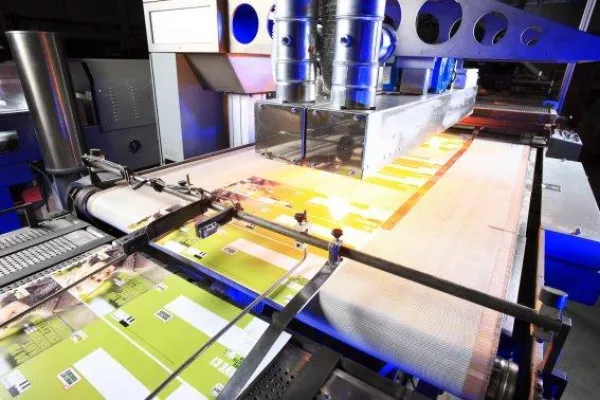
Stop Guessing With Your UV Curing
If you’re running a PCB line, you probably already know Gallium Iodide (GaI) lamps. They’re the go-to for that sweet spot between 250nm and 350nm—exactly what you need to cure photoresists and solder masks without accidentally cooking your substrate. But for a long time, these lamps have been “dumb.” You turn them on, hope for the best, and cross your fingers. We’re changing that by turning those bulbs into smart arrays that actually talk back to you. The tricky part about GaI physics Here is the thing: these lamps are temperamental. They need to run hot to keep the iodide compound vaporized. If your power dips or the lamp gets too chilly, your UV output just tanks. It’s a nightmare. You don’t realize it’s happening until you’ve already ruined a whole batch of boards. That’s why real-time monitoring isn’t just a “nice to have”—it’s a lifesaver. When you can track the power draw and spectral output from your desk, you’ll see a lamp failing before it costs you money. Getting rid of the “coupon” headache Adding telemetry basically means putting sensors right at the source to watch voltage, current, and lamp hours. Instead of relying on manual “coupon” testing—which feels like guessing in the dark—you get a digital footprint of every single cure cycle. You know exactly how much energy hit the surface. Period. The honest trade-offs Now, it’s not all magic. Adding this tech means your wiring gets a bit more crowded. You’ll need a solid data backbone to get that info from the curing chamber back to the control room. And a fair warning: UV flux is brutal. It eats electronics for breakfast. If you use cheap sensors, you’ll be replacing them as often as the lamps. Stick with quartz-shielded sensors. They can actually take the heat. We’ve designed these systems to be drop-in replacements for your existing UV tunnels. You keep all the curing power you’re used to, but you finally stop wondering if your lamps are actually doing their job.